When I tried Sestina style for the first time, was not sure of the end result. I however went ahead…
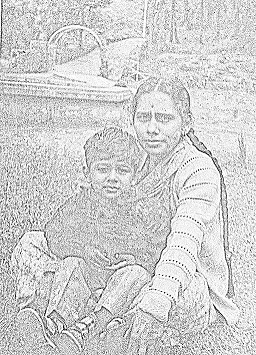
(In pic. me and my mom)
I paused, and looked back, It took me, to the time, that was so precious, with strong urge, to hold it, turn something, to static, I know, it’s just not possible, taming the time dynamics, looking back is soothing, beautiful and relaxing, all it requires, a pause and look back sometime…
Yesterday, I received an unexpected call from an old school friend, Hasnain, checking on my well-being and asking where I was these days. The call caught me completely by surprise. I had been out of touch with him for more than 45 years—since we went our separate ways after the Class 10 board examinations in 1980. Those were the days when mobile phones, WhatsApp and social media were unheard of. Once friends moved to different schools or cities, staying in touch was not merely difficult; it was almost an uphill task. Friendships could simply disappear into the passage of time. After Class 10, Hasnain opted for Biology and moved to another school, while I chose Mathematics and continued with some of our other common friends until Class 12. I subsequently moved to Roorkee for engineering. I later heard that Hasnain had secured a top rank in the CPMT and earned admission to King George Medical College—KGMC, Lucknow. Hasnain came from an exceptionally accomplished family of doctors. Both his parents were doctors. His father was a renowned surgeon, while his mother was a leading gynaecologist. Even his elder sister, when we were still together in school, had joined KGMC as a medical student. Medicine seemed almost woven into the fabric of their family. And then, life happened. Decades passed. Careers took different directions, families grew, cities changed and that school chapter of our lives slowly faded into distant memory. There was no WhatsApp message, no Facebook connection, no occasional birthday greeting—nothing. Hasnain and I simply vanished from each other’s lives. So, when my phone rang yesterday and the number displayed was from the United States, I had absolutely no idea who was calling. “This is Hasnain,” the caller said. I was still trying to place the voice. “This is Sayed Hasnain Rizvi… your old school friend.” It took me a few moments before the name finally connected with the boy I had known more than four decades ago as simply Hasnain. What followed was a long and wonderfully nostalgic conversation. We travelled through memories spanning more than 45 years—school, friends, examinations, the paths we chose and, inevitably, the many years that had somehow disappeared in between. Interestingly, he had obtained my number through another common friend with whom I am still in regular touch. One small thread from the past had eventually led to another, and suddenly a friendship that had been silent for 45 years came alive again. Towards the end of our conversation, Hasnain told me that he would be visiting Lucknow during Diwali for a reunion of his KGMC batch. Then came the question: “Will you be available around those dates?” My answer was immediate. “Yes. Definitely yes.” After all, how often does one get an opportunity to meet a friend whom one had lost—not to death, not to disagreement, but simply to the passage of time? I am already looking forward to Diwali for an entirely different reason this year. I will be meeting my lost friend after 45 years. Some friendships may go silent for decades, but perhaps they never really disappear. They simply wait patiently for a phone call to bring them back to life.
What’s the best local dish you’ve ever eaten while traveling?
Some journeys are remembered for the places we visit. Others linger in our hearts because of the people we meet. My visit to Sinhagad Fort is unforgettable not because of its magnificent history or breathtaking views, but because of a humble meal served by an unknown Tai on a rainy afternoon. We had climbed to the top of Sinhagad on a pleasant morning. The fort stood majestically against the backdrop of the Sahyadri hills, its weathered stone walls whispering stories of courage and sacrifice. We wandered through its ruins, paused to admire the sweeping valleys below, and allowed the cool mountain breeze to wash away the fatigue of the climb. Nature, however, had a surprise waiting for us. Without warning, dark clouds gathered overhead, and within minutes, the skies opened up. Rain poured relentlessly, sending visitors scrambling for shelter. We too ran until we spotted a tiny hut with smoke curling out of its tiled roof. Drawn by both necessity and curiosity, we stepped inside. The first thing that greeted us was not the warmth of the fire but the irresistible aroma of food cooking on a mud stove. Inside, a Maharashtrian Tai was quietly at work. With practiced hands, she tended the wood fire as if the rain outside didn’t exist. Curious, I asked, “Tai, tu kaay shijavat aahes?” Without looking up, she smiled and replied, “Tumhi zunka-bhakar khal ka? Chaha suddha aahe.” I had heard countless people praise zunka-bhakar, Maharashtra’s iconic rustic meal, but had somehow never tasted it. Hunger, the chilly weather, and the inviting aroma left no room for hesitation. “Ho, Tai. Don plate zunka-bhakar ani don chaha.” She spread a woven mat on the floor and asked us to sit. As we waited, we watched her prepare our meal. The dough was gently patted into thick bhakars by hand and roasted over the wood fire. Beside it, the zunka simmered slowly, releasing the fragrance of roasted gram flour, onions, garlic, mustard seeds and green chillies. There was no rush, no shortcuts—only the quiet rhythm of traditional cooking. Soon, she placed before us spotless stainless-steel plates carrying steaming hot zunka-bhakar. The first bite was nothing short of extraordinary. The smoky flavour of the freshly roasted bhakar blended beautifully with the spicy, earthy zunka. Every mouthful carried the unmistakable taste of simplicity. It wasn’t merely food; it was comfort served on a plate. Outside, rain drummed steadily on the tiled roof. Mist drifted across the hills, hiding and revealing the valleys in turns. Inside, the warmth of the mud stove embraced everyone who had sought refuge there. Strangers smiled at one another, united by the rain, the weather, and the irresistible aroma of freshly cooked food. Tai noticed our empty plates and asked with motherly affection, “Ajun bhakar deu ka?” We exchanged a quick glance and laughed. “Ho, Tai.” The second helping disappeared even faster than the first. Just when we thought the experience couldn’t get any better, Tai returned carrying steel tumblers filled with piping hot masala tea. The fragrance of ginger, cardamom and freshly crushed spices rose gently with the steam. Holding that warm tumbler between my palms while watching sheets of rain sweep across the ancient fort remains one of the most peaceful moments of my life. Every sip seemed to warm not just the body but the soul. When the rain finally stopped, sunlight timidly broke through the clouds. The fort glistened as though it had just awakened from a long sleep. We thanked Tai, paid our modest bill, and continued exploring Sinhagad. Years have passed, yet I scarcely remember the price of that meal. What I remember is the warmth. The warmth of the wood fire. The warmth of the tea. The warmth of the freshly cooked zunka-bhakar. And above all, the warmth of a stranger who welcomed rain-soaked travellers with the generosity that only simple hearts possess. Since then, I have dined in elegant restaurants and luxury hotels across many cities. Some served exquisite cuisine on fine china with impeccable service. Yet none of those meals has ever matched the joy of that rainy afternoon on Sinhagad. Because the finest meals are never measured by the menu or the bill. They are measured by the memories they leave behind.
A while ago, I cried my heart out, To an emptiness no words could name. Somewhere deep within my silent soul, I searched for a reason to smile again. The world stood still in quiet grace, As gentle raindrops kissed the earth. They lingered softly on tender leaves, Whispering promises of rebirth. I looked upon the little plants I had placed in hope a few months before. Some reached eagerly toward the sky, While others grew a little more slowly. Yet none had given up the fight; Each carried life in its own way. They taught me that not every dream Must bloom upon the selfsame day. In their patience, I found my strength; In their silence, I found my peace. Hope does not arrive with thunder— It grows like leaves, in quiet release. And so I smiled through misty eyes, For life had gently shown its art: When reasons vanish from the mind, A tiny garden can heal the heart.
There’s a little child Who still lives inside me. He doesn’t knock on the door anymore; He simply appears Whenever loneliness spreads Like the evening across an empty room. We sit together in silence. Sometimes we talk. Sometimes words feel unnecessary. He already knows The weight my heart is carrying. When tears arrive uninvited, He doesn’t wipe them away. He lets them fall… As if every tear deserves A little journey of its own. He laughs too— Not at the world, But at the small, forgotten joys Hidden in old memories, Like a paper boat Still floating after the rain. He has never asked me For toys, victories, or dreams. He only borrows my sorrow, Splits it into two, And quietly returns Half of it as hope. People see an ageing man. They never notice The child holding his hand From somewhere within. When my journey reaches Its final bend, I won’t ask life for another dawn. I’ll ask only this— Let that little child Walk beside me till my last breath. For if he stays, Even death will feel Like going home…
If you had to give one life-changing tip, what would it be?
If there is one piece of advice I could offer that has the potential to transform a person’s life, it would be this: adopt a minimalist way of life. Minimalism is often misunderstood as owning very few possessions or living in an almost empty house. In reality, it is about intentionally removing the unnecessary to make room for what truly matters. It is not a life of deprivation, but a life of clarity and purpose. We spend much of our lives chasing bigger homes, newer gadgets, fashionable clothes, and countless other possessions. Yet, every new acquisition silently demands our time, money, attention, and maintenance. Instead of owning our possessions, we often become owned by them. A minimalist lifestyle encourages us to ask a simple question before acquiring anything: Do I really need this? More often than not, the answer is no. By buying less, we save money, reduce stress, and free ourselves from the burden of managing excess belongings. Minimalism extends beyond material possessions. It also means decluttering our schedules, limiting unnecessary commitments, avoiding toxic relationships, reducing digital distractions, and learning to say “no” without guilt. The result is more time for family, meaningful friendships, hobbies, reading, learning, and self-reflection. Financially, minimalism is empowering. When your desires are fewer, your expenses naturally decline. Savings grow, investments accumulate, and financial independence becomes easier to achieve. Wealth is not merely about earning more; it is equally about needing less. Environmentally, minimalism is a responsible way of living. Consuming only what we genuinely need reduces waste, conserves resources, and leaves a lighter footprint on the planet. Most importantly, minimalism brings peace of mind. Happiness gradually shifts from what we own to how we live. We begin to value experiences over possessions, relationships over status, and contentment over endless consumption. The beauty of minimalism lies in its simplicity. It does not demand drastic changes overnight. It begins with small, conscious decisions—buying less, keeping only what adds value, and focusing on what genuinely enriches our lives. In a world that constantly tells us we need more, minimalism gently reminds us that less is often more. It is not about living with the least possible; it is about living with just enough. And in that “just enough,” many people discover a freedom, contentment, and joy that no amount of excess can ever provide.
The belief that everything happens for a reason is comforting, especially in times of adversity. It reassures us that life unfolds according to a larger plan. However, reality appears to be more nuanced. Not every event has a single explanation or a predetermined purpose. Some events have clear and identifiable causes, others result from chance or probability, and many arise from the complex interaction of numerous factors. For those who believe in it, karma may also play a role—the consequences of past actions, whether from this life or previous ones, unfolding in ways that are not always apparent.
Perhaps the wisest approach is not to insist that every event has a single reason, but to recognize that life is shaped by a combination of cause, chance, human choices, and possibly karma. While we may never fully understand why something happens, we always have the freedom to decide how we respond.
During our visit to Northern Ireland, we found ourselves stranded in the countryside near Belfast when the rented car, we were travelling in broke down unexpectedly. As if that wasn’t enough, heavy rain began to pour and darkness was slowly descending. We felt completely helpless. I called the car rental agency and explained the situation and also shared our location. I was told that they will arrange a replacement car, which will reach us in about an hour. We walked some distance in search of shelter and came across a small roadside eatery named Islamabad Mess. As an Indian, I paused for a moment on seeing the name, but necessity left us with little choice. The moment we entered, an elderly lady, who looked to be in her eighties, greeted us warmly from behind the counter and offered us seats. The comforting warmth inside and the aroma of freshly cooked food were a welcome relief from the cold rain outside. After listening patiently to our predicament, she smiled reassuringly and said, “Don’t worry. You can wait here, have some hot food and tea. You can call the car rental agency to convey them this address. Islamabad Mess is an old landmark eatery and most people know it.” A little later she introduced herself, “My name is Farzana, though everyone here calls me Farzana Bi or simply Aapa.” While her staff were busy in the kitchen, she pulled up a chair and sat beside us. “Are you from Pakistan or India?” “India,” I replied. “What would you like to eat—desi or Irish/Italian?” “We are pure vegetarians. No eggs, no meat, no fish.” Instantly, Aapa slipped effortlessly to Hindi-Urdu. “Aloo ke parathe chai ke saath khaoge?” We happily agreed. As the food was being prepared, she continued chatting. “Are you visitors, or do you live here?” “We’ve come from India to visit our daughter in London and decided to explore this part of the UK as well.” After a while she smiled and asked, “By the way, which part of India are you from?” “Lucknow,” I replied. For a brief moment, she simply stared at me. The effect of that single word was something I could never have imagined. Farzana Bi’s eyes filled with tears. She began sobbing softly. “My mother was from Lucknow,” she said in a trembling voice. “Before Partition, our family lived in Daliganj. My grandfather ran a chikankari business in Chowk. I’ve heard countless stories of Lucknow from my mother. She spent her childhood there and never stopped talking about the city.” When she regained her composure, she told us that her family belonged to Mirpur and had migrated to the UK nearly five decades earlier. Her husband had worked in a textile mill in Manchester before relocating to Northern Ireland. Her three sons now ran grocery stores in Belfast, while she preferred the peaceful countryside, managing Islamabad Mess, the little eatery started years ago by her late husband. Soon, steaming hot aloo parathas arrived, accompanied by strong desi-style tea. On that cold, rainy evening, nothing could have tasted better. Meanwhile, the replacement car arrived and we were ready to go. Before leaving, I walked up to the counter and asked for the bill. Farzana Bi looked at me almost indignantly. “What bill?” she said. “You are family now. How can I charge my own family for a meal?” As we drove away through the rain-soaked countryside, I couldn’t help reflecting that while political borders may divide nations, they can never erase shared memories, a common language, or the warmth of human hearts. Sometimes, thousands of miles away from home, you unexpectedly discover a little piece of it waiting for you.
A day before we were to leave for our trip to Kutch and Saurashtra, my wife handed me a list of medicines and essentials to buy. She never travels without a well-stocked first-aid kit and is meticulous about replenishing consumed medicines and replacing expired ones. I bought everything on the list and returned home. As she carefully checked each item, she looked up and said, “You forgot the ORS packets. They were on the list too.” I tried to avoid another trip to the pharmacy, saying they probably wouldn’t be needed. But she insisted. Reluctantly, I went back and bought a few packets. She was satisfied only after every item was in place. The next day, we boarded the train from Mumbai to Gandhidham. About halfway through the journey, we were awakened early in the morning by the continuous cries of a young child. She had vomited several times, appeared severely dehydrated, and had become almost limp. Her distressed parents were helpless, and the mother broke down in tears. Without wasting a moment, my wife took out a packet of ORS, mixed it with clean water, and asked the mother to give it to the child immediately. She also handed over a couple of extra ORS packets and advised her to continue giving the solution in small quantities at regular intervals. Within about an hour, the child’s condition began to improve. At the next station, the family was able to seek medical attention. As I watched the little girl recover, I couldn’t help but smile. The very item I had considered unnecessary turned out to be the most valuable purchase of the trip. It was a gentle reminder that preparedness often seems excessive—until the moment it becomes indispensable.
This incident took place in Lucknow and restored my faith in the police and in human honesty. I was deeply upset after losing my high-end smartphone. Somewhere in a busy marketplace in Lucknow, I had inadvertently dropped it. The moment I realized it was missing, I retraced my steps, revisited every shop I had been to, and searched every possible place—but all my efforts were in vain. With little hope left, I decided to visit the police station and register a complaint. To be honest, I had serious doubts that it would lead to any positive outcome. Like many others, I had often heard stories about the inefficiency and casual approach of the police department. At the police station, I explained what had happened. The officer on duty directed me to the Cyber Cell, which was located within the same premises. The officer there asked if I could provide the IMEI number of my lost phone. Fortunately, I had noted it down on a small piece of paper and kept it safely in my wallet. I handed it over to him. Looking at it, he simply said, “Thank you.” He also asked for an alternate contact number so that I could be informed of any progress. Since I did not have another phone with me, I gave him my mother’s mobile number and returned home. That evening, my mother called out, “There’s a call for you from the police station.” She handed me the phone, and the officer on the other end said, “Your phone has been recovered. Please come to the police station with a valid ID proof to collect it.” For a few moments, I was pleasantly stunned. I informed my mother, gathered my identification documents, and headed straight to the police station. After completing the necessary formalities, my phone was finally back in my hands. Curious to know how it had been found so quickly, I asked the officer. He explained that the IMEI number had enabled them to trace the phone. It had been found by a local vendor, who had carefully kept it safe with the intention of returning it to its rightful owner. This experience taught me two valuable lessons. First, always keep a record of your phone’s IMEI number—it can make all the difference. Second, the Lucknow Police deserve appreciation for their promptness, professionalism, and courteous approach. Equally commendable was the honesty of the vendor who safeguarded the phone until it could be returned. In an age where we often hear negative stories, this incident reminded me that integrity and dedication still exist, and they deserve to be acknowledged.
Is success wealth, name, or fame? Success is setting a goal—big or small—and achieving it through sincere effort and perseverance. Wealth, name, and fame may be by-products of success, but they are not its true measure. The real reward of success is peace of mind, contentment, and the satisfaction of having fulfilled one’s purpose. A person who attains modest goals and lives with inner happiness may be far more successful than someone who possesses great wealth but remains perpetually dissatisfied. A few simple tips for achieving success:
Set clear and realistic goals. Break large goals into smaller, manageable tasks.
Be consistent; small daily efforts often yield remarkable results.
Embrace discipline over momentary motivation. Learn from failures rather than being discouraged by them.
Keep an open mind and never stop learning.
Value integrity and honesty in all pursuits.
Maintain good health, as physical and mental well-being are foundations of success.
Be grateful for what you have while striving for what you seek.
Compare yourself less with others and more with your own potential.
Ultimately, success is not a destination but a journey. When your actions align with your values and your achievements bring you peace, fulfillment, and contentment, you have truly succeeded.

 Sanjay's Blog